
Buying a house in Brisbane is a big call, and it rarely feels straightforward the first time round. I’ve sat across the table from plenty of buyers, from first-timers to people on their third investment property, and almost everyone starts with the same question: where do I begin? This guide breaks down what actually happens between deciding to buy and picking up the keys.
Why Buy a House in Brisbane?
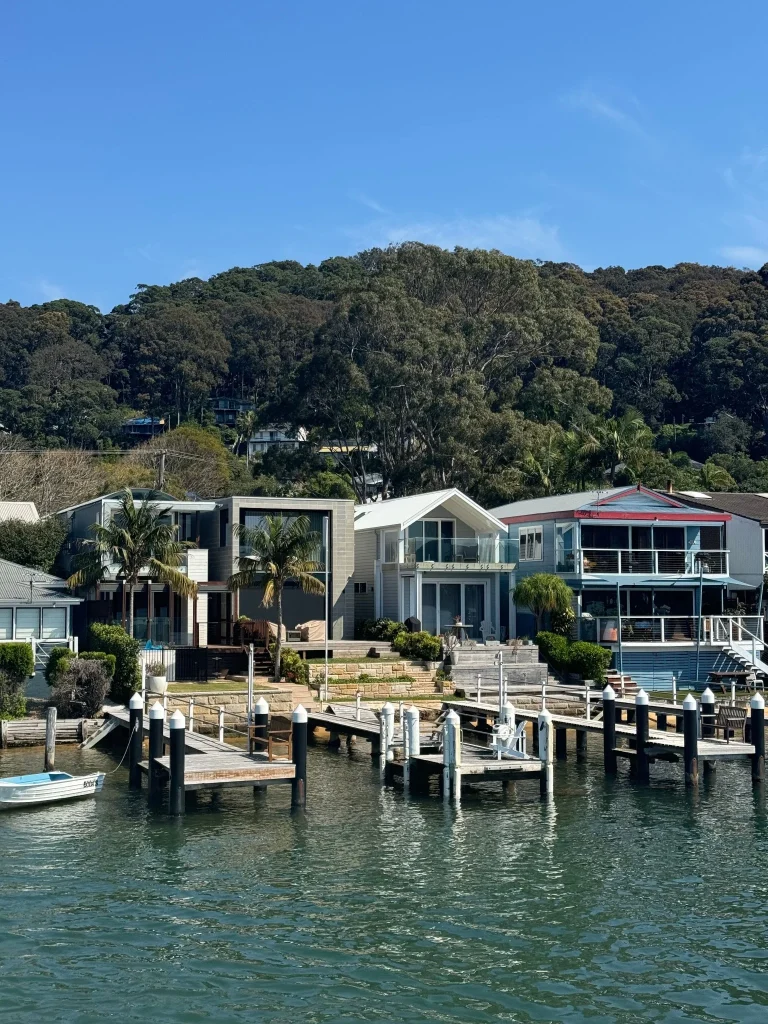
Brisbane has remained one of Australia’s fastest-growing capital cities in recent years, with its population growth rate continuing to rank among the highest in the country, according to the Australian Bureau of Statistics. That growth isn’t random. People move here for the lifestyle, the subtropical climate, and a housing market that’s historically offered better value than Sydney or Melbourne.
A few reasons buyers keep looking here:
- Population growth that shows no sign of slowing, keeping demand steady across the city and its growth corridors.
- A lifestyle built around river access, green space, and a genuine outdoor culture.
- Infrastructure investment. Major transport and precinct upgrades, some tied to the 2032 Olympic and Paralympic Games, are reshaping whole pockets of the city.
- An economy that doesn’t lean on one industry. Health, education, construction, and professional services all support long-term housing demand.
- Plenty of family-friendly suburbs in the outer and middle rings, with larger blocks and good schools without giving up city access.
Whether you’re buying to live in or buying to invest, these fundamentals hold up over the long run.
Is Now a Good Time to Buy a House in Brisbane?
This is the question I hear most, and the honest answer is that it depends on your circumstances more than the calendar. Brisbane’s market moves in cycles, shaped by supply, interest rates, and buyer competition, and no two years look the same.
A few things tend to matter more than trying to time the market:
- Where your own readiness sits. Is finance sorted, is your budget realistic, and do you actually know what you can afford?
- Supply in the suburbs you’re targeting. Some Brisbane pockets have so few listings that competition stays high no matter what the broader market is doing.
- Whether you’re seeing the off-market opportunities. A fair chunk of Brisbane property changes hands before it ever reaches the major listing sites, especially in tightly held areas.
Waiting for the “right” moment often costs buyers more than acting once they’re financially prepared. In my experience, buyers who hold off for years hoping for a price drop usually pay a similar amount later, minus the years of equity growth they could have built in the meantime.
Step-by-Step Process for Buying a House in Brisbane
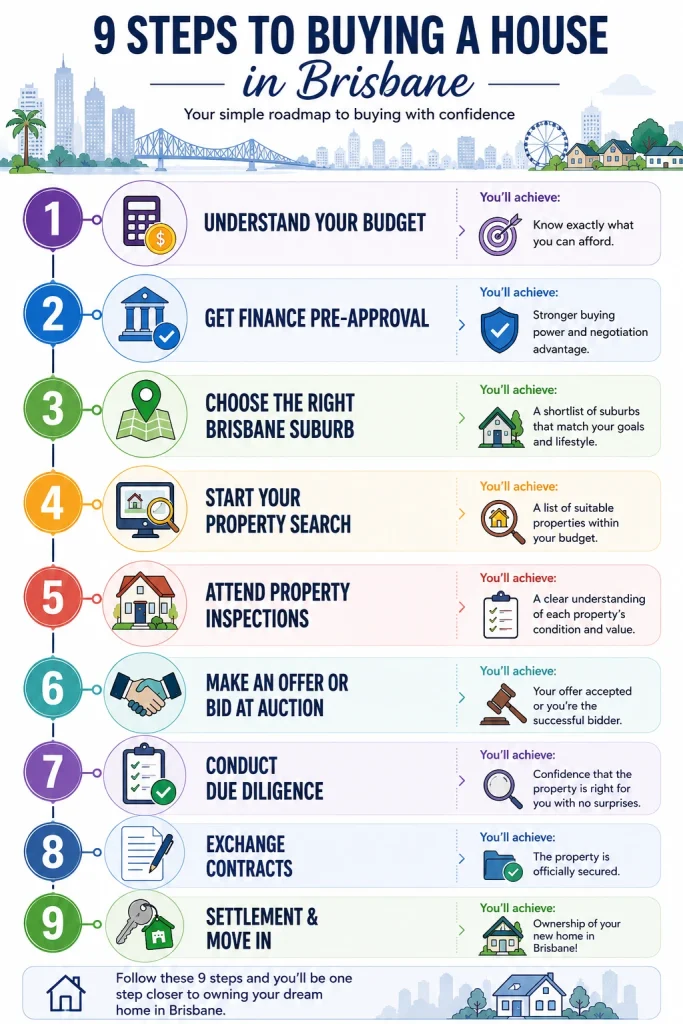
Step 1: Understand Your Budget
This is the part people want to skip, and it’s the one that matters most. Work out your borrowing capacity, your deposit, and whether you qualify for any government support. First home buyers purchasing a new home in Queensland may be eligible for a full transfer duty concession and a First Home Owner Grant of up to $30,000, provided they meet the eligibility requirements set by the Queensland Revenue Office. The available benefits depend on factors such as the contract date, property type, and property value. Stamp duty, legal fees, and moving costs should be in that number too, not tacked on later.
Step 2: Get Finance Pre-Approval
Sellers take pre-approved buyers more seriously, and in a competitive market that edge counts. Pre-approvals usually last three to six months, so it pays to time yours so it’s still active once you’re out inspecting properties.
Step 3: Choose the Right Brisbane Suburb
Local knowledge pays off here. Schools, transport links, flood risk, planned infrastructure, and long-term capital growth all factor in, worth more than a suburb’s name or reputation alone. Brisbane City Council’s Flood Awareness Map lets you check a property’s flood history before you get too attached (Brisbane City Council).
Step 4: Start Your Property Search
Real estate websites and local agent networks are the obvious starting points, but not the whole picture. Some of the best opportunities in Brisbane never reach a public listing, and off-market access is one of the clearest advantages of working with a buyers agent.
Step 5: Attend Inspections
Don’t just look at the finish. Structural cracks, water stains, poor renovations, and how the home is oriented for light and airflow tell you far more than fresh paint. Stand in the street too, listening for traffic noise and getting a feel for the wider neighbourhood.
Step 6: Make an Offer or Bid at Auction
Brisbane properties sell both ways. Private treaty gives you room to negotiate on price and conditions, while auctions call for a firm bidding strategy with no cooling-off protection at all. If you end up in a multiple-offer situation, decide your ceiling price beforehand. It’s much harder to hold that line once you’re emotionally invested.
Step 7: Conduct Due Diligence
A building and pest inspection should be carried out in line with the Australian Standard AS 4349.1, which sets out how pre-purchase inspections are meant to be conducted and reported (Standards Australia via QBCC). Council overlays, easements, and body corporate records are worth checking too, particularly for a unit or townhouse.
Step 8: Exchange Contracts
Once your offer’s accepted, you’ll sign a contract. Queensland buyers of residential property, outside of auction sales, get a five business day cooling-off period that starts the day they receive the signed contract (Queensland Government). Read your deposit terms and any special conditions closely before that window shuts.
Step 9: Settlement
Your solicitor or conveyancer finalises the transfer on settlement day, funds move between accounts, and you get the keys. Most buyers do a final walk-through beforehand to confirm the property’s still in the condition agreed at contract.
Costs of Buying a House in Brisbane
| Cost | What It Covers |
| Deposit | Usually a percentage of the purchase price, paid on exchange |
| Stamp Duty | Transfer duty payable to the Queensland Revenue Office, concessions may apply |
| Legal Fees | Conveyancing and contract review |
| Building & Pest | Pre-purchase inspection under AS 4349.1 |
| Loan Costs | Application, valuation, and lender’s mortgage insurance if applicable |
| Insurance | Building and contents cover from settlement |
| Moving Costs | Removalists, connections, and incidentals |
Common Mistakes Buyers Make
Scroll through Reddit or a buyer forum long enough and you’ll notice the same regrets coming up again and again:
- Getting attached to one property, which weakens your negotiating power.
- Skipping the inspection to move faster, then paying for it in repairs later.
- Not checking the flood record before signing anything.
- Underestimating how much competition a good Brisbane suburb can attract.
- Forgetting the extra costs. Stamp duty, legal fees, and moving expenses add up fast.
- Overpaying when the moment gets the better of them. Set your limit before you’re in the room.
- Sitting on a decision too long. Properties in sought-after suburbs don’t wait around.
Tips for Buying a House in Brisbane’s Competitive Market
- Get pre-approved before you start looking seriously, not after you’ve found something you like.
- Look at recent comparable sales rather than trusting an online estimate on its own.
- Once you find the right property, move. That includes booking inspections quickly.
- Have your negotiation position worked out before you make an offer, not while you’re making it.
- Ask around about off-market opportunities in the suburbs you’re targeting.
- Local expertise beats a guess about suburb trends most of the time.
Should You Use a Buyers Agent?
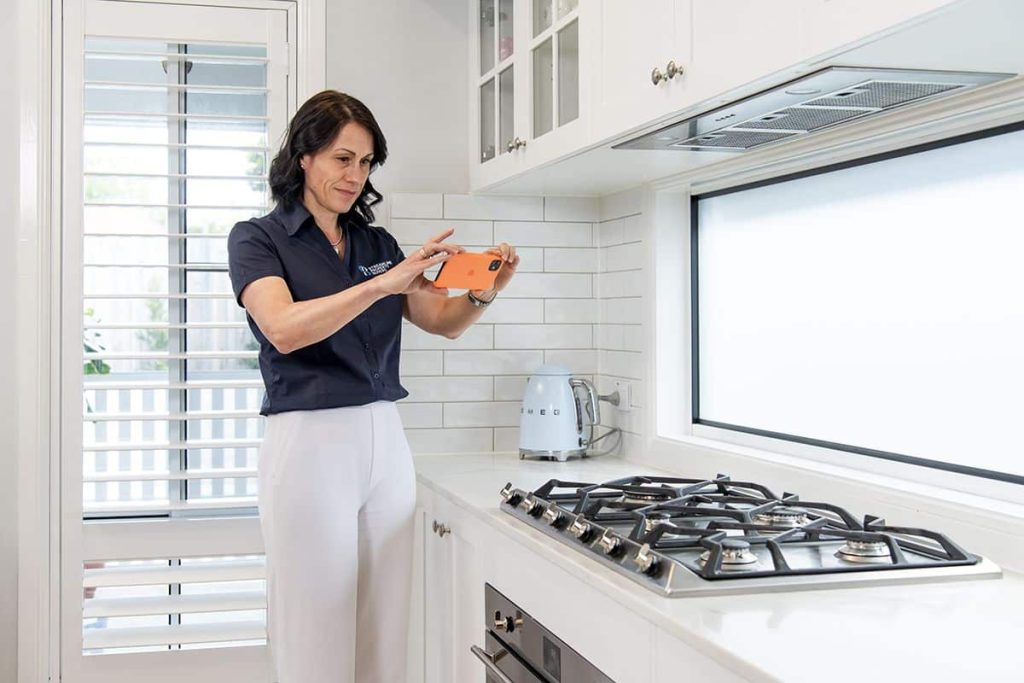
A buyers agent works for you, not the seller, and that one difference changes the whole dynamic of the purchase. Here’s what buyers tell me they value most:
- Getting into homes that never reach a public listing.
- Someone negotiating on their behalf who isn’t emotionally attached to the outcome.
- The hours saved on searching, shortlisting, and sitting through inspections.
- Fewer expensive mistakes, since a second, experienced set of eyes tends to catch what buyers miss on their own.
- Suburb knowledge built up over years of actual transactions, not just a browse of listing sites.
- A clearer read on growth potential when it needs to sit alongside lifestyle needs.
How Streamline Property Buyers Can Help You Choose the Right Property
There’s a lot riding on getting this right, and no single step matters more than the others. Budgeting properly, doing your due diligence, and keeping a level head through negotiations all point the same direction: less risk, and a stronger position by settlement day.
This is where we come in. At Streamline Property Buyers, we work with home buyers and investors across Brisbane’s suburbs, drawing on knowledge that only comes from years on the ground. Our job isn’t just finding you a property, it’s finding the right one and negotiating it well. If you’d like to talk through your next move, reach out to the Streamline Property Buyers team.
Connect with us today
To book a FREE discovery call ~ Click Here
Follow us on LinkedIn | YouTube | Instagram | TikTok
Tune into our podcast ~ Brisbane Property Podcast
