
Auction day has a reputation for being nerve-racking, and it’s fairly earned this. Once the hammer falls, that’s it. There’s no cooling-off period and no chance to change your mind. Most of the regret we see later could have been avoided if buyers understood the common auction bidding pitfalls before they ever registered as a bidder.
I’m at auctions across Brisbane most weekends with our buyers agent team, and the same handful of mistakes crop up again and again. One buyer misses out on a home they could easily have won. Another pays thousands more than they needed to. Almost every one of those outcomes traces back to a small set of avoidable errors.
Here are the seven pitfalls of buying property at auction that we see most often, along with what to do instead.
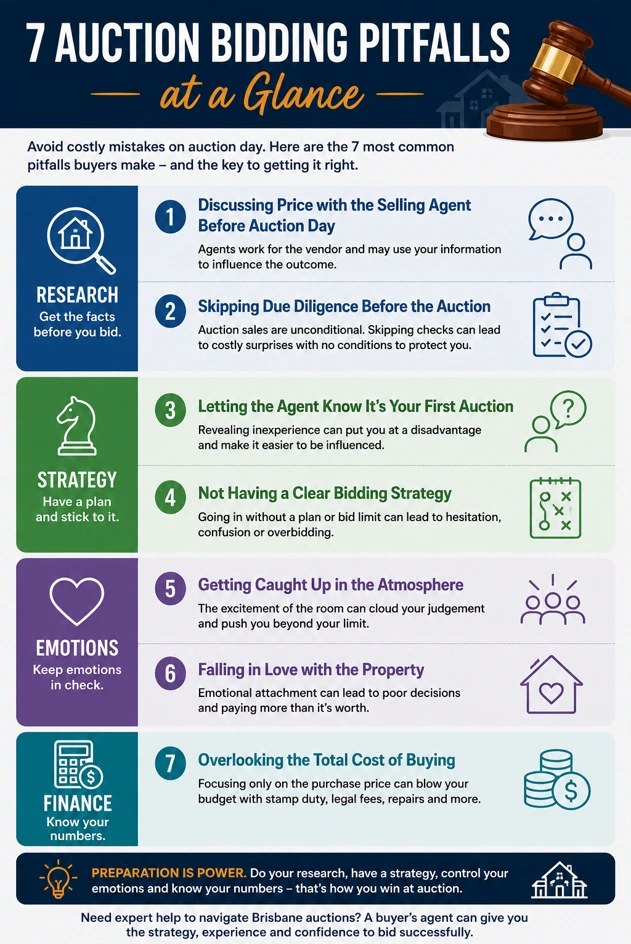
1. Discussing price with the selling agent before auction day
Remember that the selling agent works for the vendor, not for you, no matter how friendly the conversation feels in the lead-up to auction day. Part of their job during the campaign is to gauge how far buyers might go, which then helps them manage the seller’s expectations. Watch for agents who:
- Push you to put in a pre-auction offer
- Ask where you think the property sits on value
- Ask you to compare it against other recent sales nearby
Queensland law generally prohibits the auctioneer or real estate agent from providing buyers with the reserve price, an indication of the likely successful price, or a price guide for residential property being offered by auction. This means buyers need to undertake their own research to form an independent view of value.
You’re entitled to ask for a list of comparable sales, and most agents will provide one. Just keep in mind it’s compiled by someone representing the seller, so it may quietly leave out the lower sales that don’t support the vendor’s case. Do your own research, rather than relying only on what’s handed to you.
TIP: Research the price yourself well before auction day, and keep your numbers to yourself when the agent comes asking.
2. Skipping due diligence before the auction
A property sold at auction is an unconditional sale. Every bit of due diligence needs to be done before you register to bid, not after the hammer falls. Skip this step and you’re carrying real risk of buying at auction with no finance clause or building inspection condition to fall back on if something turns up wrong.
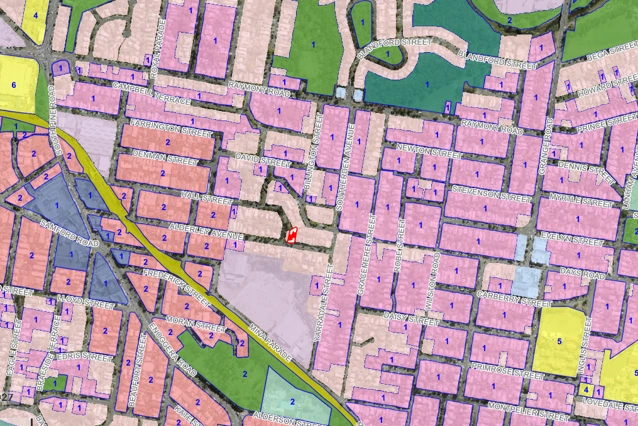
Before auction day, work through:
- Property checks: flood mapping, noise impacts, nearby infrastructure or development approvals, and underground services
- Contract review by a solicitor: so you actually understand what you’re bound by if you’re the winning bidder
- Building and pest inspections: to catch structural issues, damage, or pest activity before you commit
- Body corporate records (where applicable): unresolved issues, upcoming special levies, and the current by-laws
TIP: Understand the documents supplied before auction, including the Seller Disclosure Statement and prescribed certificates where applicable, the contract, any Building and Pest Reports, body corporate information and other relevant reports. Have your solicitor or conveyancer review the legal documentation before you bid.
3. Letting the agent know it’s your first auction
Telling the agent or auctioneer you’ve never bid before can work against you. Not knowing how Queensland auctions run puts first-time bidders at a real disadvantage, and inexperienced buyers tend to trip up in similar ways:
- They ask how much they’re allowed to bid because bid increments aren’t clear to them
- They ask whether the property is “on the market” mid-auction
- They assume holding the highest bid on a passed-in property gives them exclusive negotiating rights
- They mistake a vendor bid for a genuine bid from another registered buyer
- They lift their bid limit on the day simply because of the atmosphere in the room
An experienced auctioneer may recognise when a bidder is uncertain or inexperienced and use the normal pace and dynamics of the auction to encourage further bidding. Understanding the process beforehand can help you make decisions based on your strategy rather than the pressure of the moment.
TIP: If you’re new to this, put in the time to learn how Queensland auctions actually work, or bring in someone who already knows the process to bid for you.
4. Waiting for the property to be “on the market” before bidding
This is one of the most common pitfalls of buying property at auction, and it’s easy to fall into. If every registered bidder is holding out for the auctioneer to announce the property on the market, the price can stall well short of where it needs to be, and the whole auction grinds to a halt.
Rather than basing your strategy entirely on whether the auctioneer announces the property as on the market, make bidding decisions according to your own assessment of value and your predetermined limit. If that doesn’t happen, and the property passes in, from there, the door opens to other buyers, including people who couldn’t bid under auction conditions in the first place, which usually means more competition and less transparency.
TIP: If you’re genuinely there to buy, bid. Don’t sit back waiting for an announcement that might not come.
5. Bidding by phone through the selling agency
Buyers who can’t make it to the auction in person often arrange for someone from the selling agency to take their bids over the phone. It’s usually offered free of charge, but there are real drawbacks worth weighing up first:
- You can’t see other bidders or pick up on their body language
- You’re relying entirely on what the phone agent relays to you, and may miss what’s actually happening in the room
- Whoever is taking your instructions is engaged by the seller, and their priority is getting the best possible price for the vendor, not for you
TIP: If you can’t be there yourself, a buyers agent gives you someone in your corner instead. Standalone auction bidding services are available at varying price points, depending on whether the service also includes property appraisal, strategy and due diligence support.
6. Letting emotions take over
Auctions move fast, and that pace pushes buyers toward decisions they wouldn’t make with a clear head. Fear of missing out is a genuinely powerful force, and it’s one of the more overlooked risks of buying at auction.
As buyers get close to their limit, their body language usually gives them away. Experienced auctioneers and rival bidders pick up on these cues and use them to keep the bidding climbing.
TIP: It’s also worth getting a feel for the auctioneer running the sale. Every auctioneer has their own style, and knowing the language and techniques they lean on helps you stay level-headed instead of getting swept up on the day.
7. Leaving finance arrangements until the last minute
It sounds obvious, but we still see it happen often. There’s no finance condition written into an auction contract, so unless your finance is genuinely locked in beforehand, you won’t have the confidence to bid all the way to your true limit.
The deposit is generally required immediately or shortly after the auction in accordance with the contract terms. Before auction day, confirm the required deposit amount, when it must be paid and which payment methods the agent will accept. Bank transfer limits can create practical problems if they haven’t been considered beforehand.
TIP: Keep in contact with your bank or mortgage broker throughout your search. Borrowing capacity can move, especially when interest rates shift, so check in close to auction day rather than assuming your position from a few months ago still holds. Check the deposit terms in the contract at the same time you have your solicitor review it.
Bidding with confidence
Most auction bidding pitfalls trace back to the same three things: incomplete research, inexperience, and letting emotion take the wheel instead of a clear plan. Get your due diligence done early, set a firm limit, and walk in with a strategy rather than hoping it all works itself out on the day.
If you’re weighing up the risks of buying at auction against a private treaty purchase, here’s the short version: auctions aren’t inherently riskier, they just demand more preparation upfront. Understanding the law and authority of auctioning real property can help you approach the process with greater confidence, since there’s no cooling-off period to lean on if you get it wrong.
And be willing to stop. Walking away from a property that has moved past what the evidence supports is not a failed auction. It is the plan working.
How Streamline Property Buyers can help you bid at auction with confidence
Auction day carries real pressure, and no amount of preparation removes it entirely. What preparation does change is how much of that pressure ends up affecting your decisions. Our buyers agents are out at Brisbane auctions every weekend, and we know how to read the room, manage the pace of bidding, and hold a firm line on price so you’re not swept up in the moment. From due diligence through to bidding on your behalf, our focus stays on one thing: helping you secure the right property, at the right price, without falling into the pitfalls above.
Get in touch with our team to find out how we can support you before and during your next auction.
Connect with us today
To book a FREE discovery call ~ Click Here
Follow us on LinkedIn | YouTube | Instagram | TikTok
Tune into our podcast ~ Brisbane Property Podcast
