
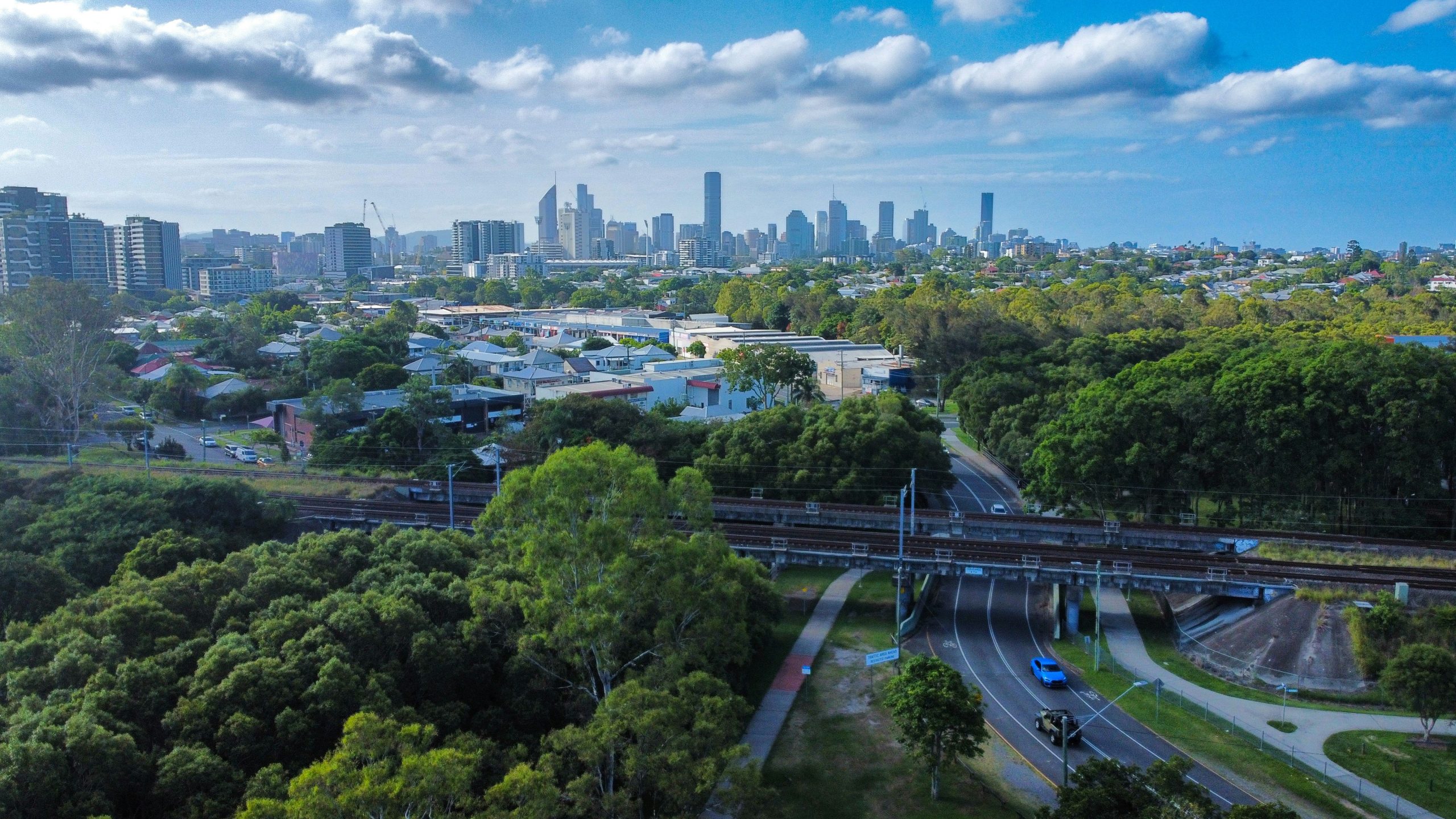
If you’re researching The Gap, you’re looking at one of Brisbane’s most desirable inner-ring suburbs, and one that doesn’t get nearly enough attention from buyers outside of the local area. Sitting just 9km west of the Brisbane CBD, The Gap QLD 4061 offers a rare combination of leafy character, strong schools, elevated lifestyle, and a property market that has shown consistent long-term growth based on current data. Whether you’re a home buyer, a property investor, or an interstate buyer weighing up commercial property options, this guide gives you a clear and honest look at what the numbers say and what it’s actually like to live here.
Key Takeaways
- Location: 9km from Brisbane CBD; bordered by natural bushland and the D’Aguilar National Park.
- Median House Price: $1,408,750 (April 2026); up 82.13% over five years.
- Median Unit Price: $1,010,000 (April 2026); up 48.75% over five years.
- Days on Market: 16 days for houses, 13 days for units, well below the Queensland average.
- Demographics: 83% owner-occupiers; median weekly household income of $2,869.
- Dominant Occupations: Professionals (39%), Managers (17%).
- Schools: 5 schools including The Gap State High School and St Peter Chanel Primary.
- Crime Score: 10/100, one of the lowest in Brisbane.
- Investment Snapshot: Gross rental yield of 2.95% (houses) and 3.86% (units); vacancy rate at 2.15%.
Geography and Local Character
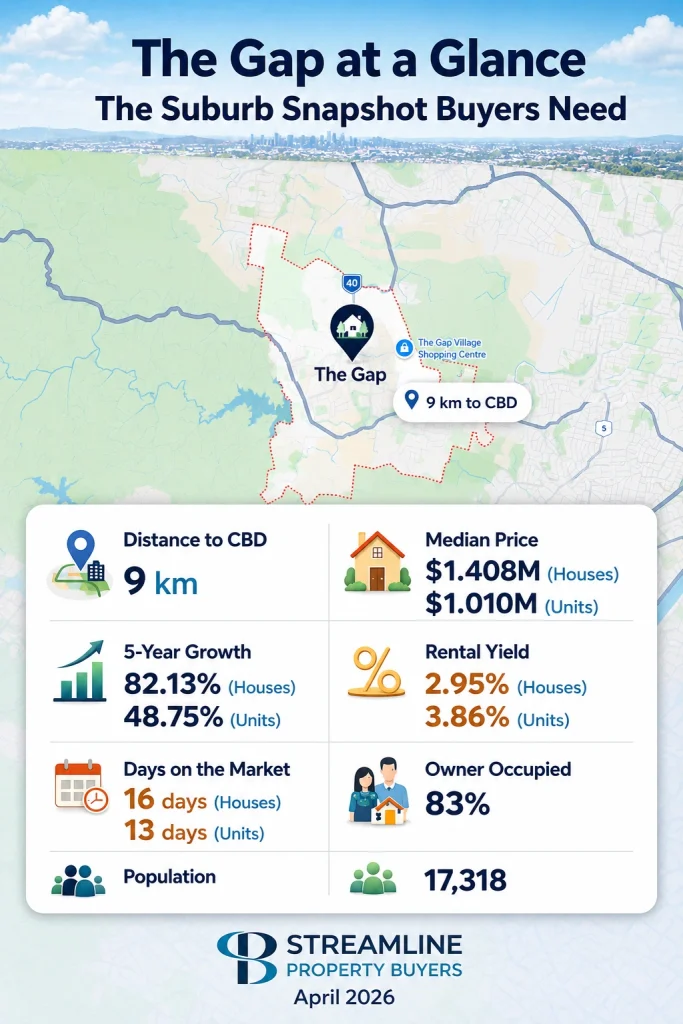
The Gap covers 12.52 square kilometres in Brisbane’s western suburbs, positioned between the inner-ring and the D’Aguilar Range. The suburb name reflects its geographical character, a natural break in the hills that creates a sheltered, green corridor close to the city.
The elevated terrain gives many streets natural breezes, tree canopy, and a feel that is noticeably different from flat, densely built Brisbane suburbs closer to the coast. Proximity to Enoggera Reservoir and the national park on its western boundary means The Gap has held back significant development pressure over the years, which has historically supported property values in the area.
Surrounding suburbs include Enoggera, Keppera, Ashgrove and Mount Coot-tha. The Waterworks Road corridor runs through the suburb as the main arterial, connecting residents to the Western Freeway and into the CBD.
Transport
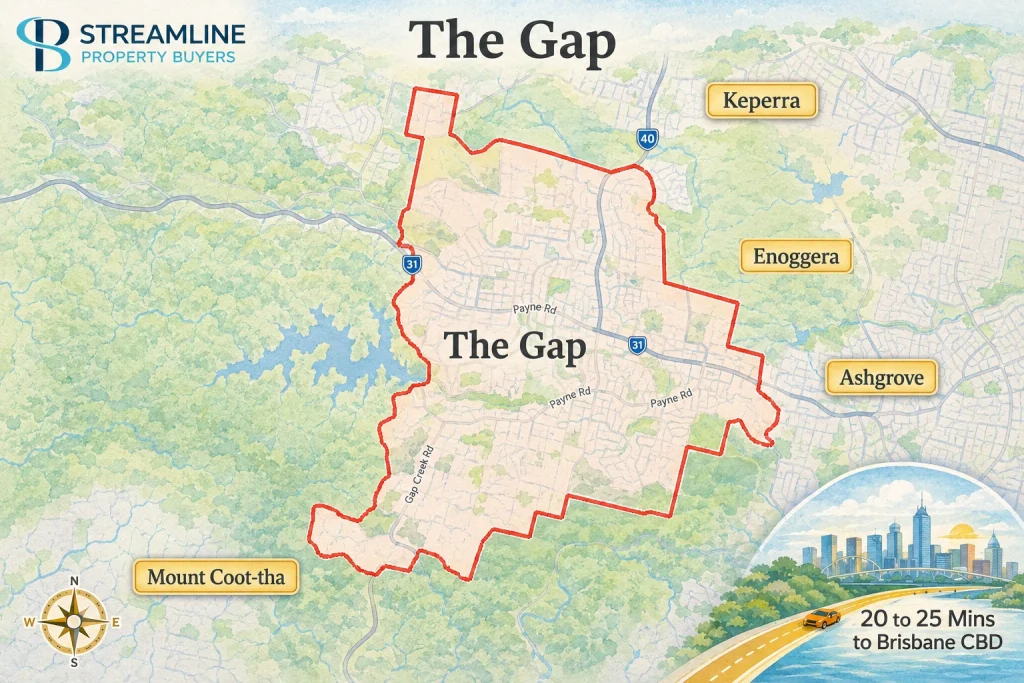
Getting from The Gap to Brisbane’s CBD takes roughly 20 to 25 minutes by car, depending on traffic via Waterworks Road and the Western Freeway. Bus services run along the main routes, connecting to the inner-city network.
The suburb is most practical for households with at least one vehicle, and the majority of residents reflect this. If you work in the CBD, the commute is manageable by Brisbane standards, and the lifestyle trade-off is widely considered worth it.
For public transport options, check timetables and route planning at translink.com.au.
Education
The Gap suburb profile stands out for families partly because of its school options within the suburb itself.
For families with young children, having this depth of early education and after-school care options within the suburb removes a meaningful logistical burden. It’s one of the less-discussed reasons The Gap holds such strong appeal for professional households with kids at different life stages.
Childcare Centres in The Gap:
| Centre | Address |
| C&K The Gap Community Kindergarten | 1174-1180 Waterworks Road |
| Payne Road Outside School Hours Care Service | 171 Payne Road |
| St Peter Chanel Outside School Hours Care | 41 Chaprowe Road |
| The Gap Cubbyhouse Montessori | 177-181 Payne Road |
| The Gap Early Childhood Centre | 1000 Waterworks Road |
| The Gap Play and Learn | 10-14 Payne Road |
| YMCA Hilder Road Outside School Hours Care | Kaloma Road |
Schools in The Gap:
| School | Type | Sector |
| Hilder Road State School | Primary | Government |
| Payne Road State School | Primary | Government |
| The Gap State School | Primary | Government |
| St Peter Chanel Primary School | Primary | Non-Government |
| The Gap State High School | Secondary | Government |
The presence of a quality state high school within the suburb is a real advantage. Many comparable inner-ring Brisbane suburbs feed into high schools further away, which adds school-run complexity for families. The Gap keeps it local.
School catchment zones can change, so always verify the specific property address using the Queensland Government school catchment tool before purchasing.
Amenities and Lifestyle
The Gap has a reputation as a place where families put down roots and stay. The owner-occupier rate of 83% backs that up. This is a suburb where people buy and hold, not one that cycles through tenants and short-term residents at pace.
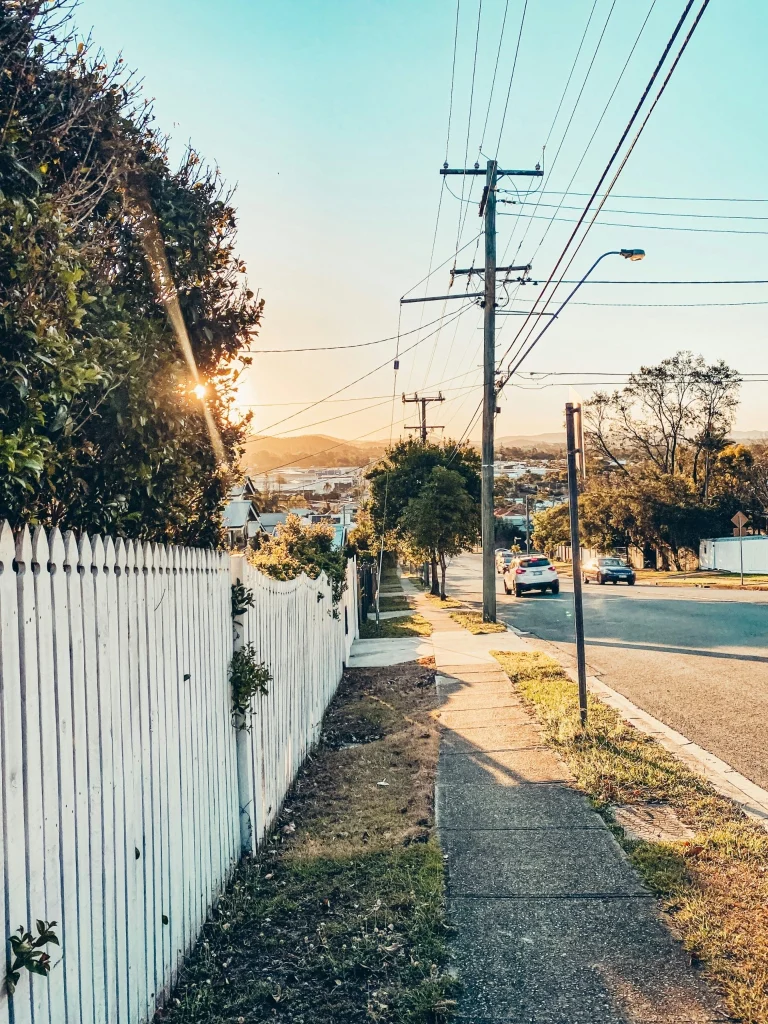
The local character is relaxed and community-focused. Residents have access to everyday retail and cafes along Waterworks Road, while larger shopping precincts at Keperra and Brookside (Mitchelton) are a short drive away. Westfield Chermside is accessible for bigger retail needs.
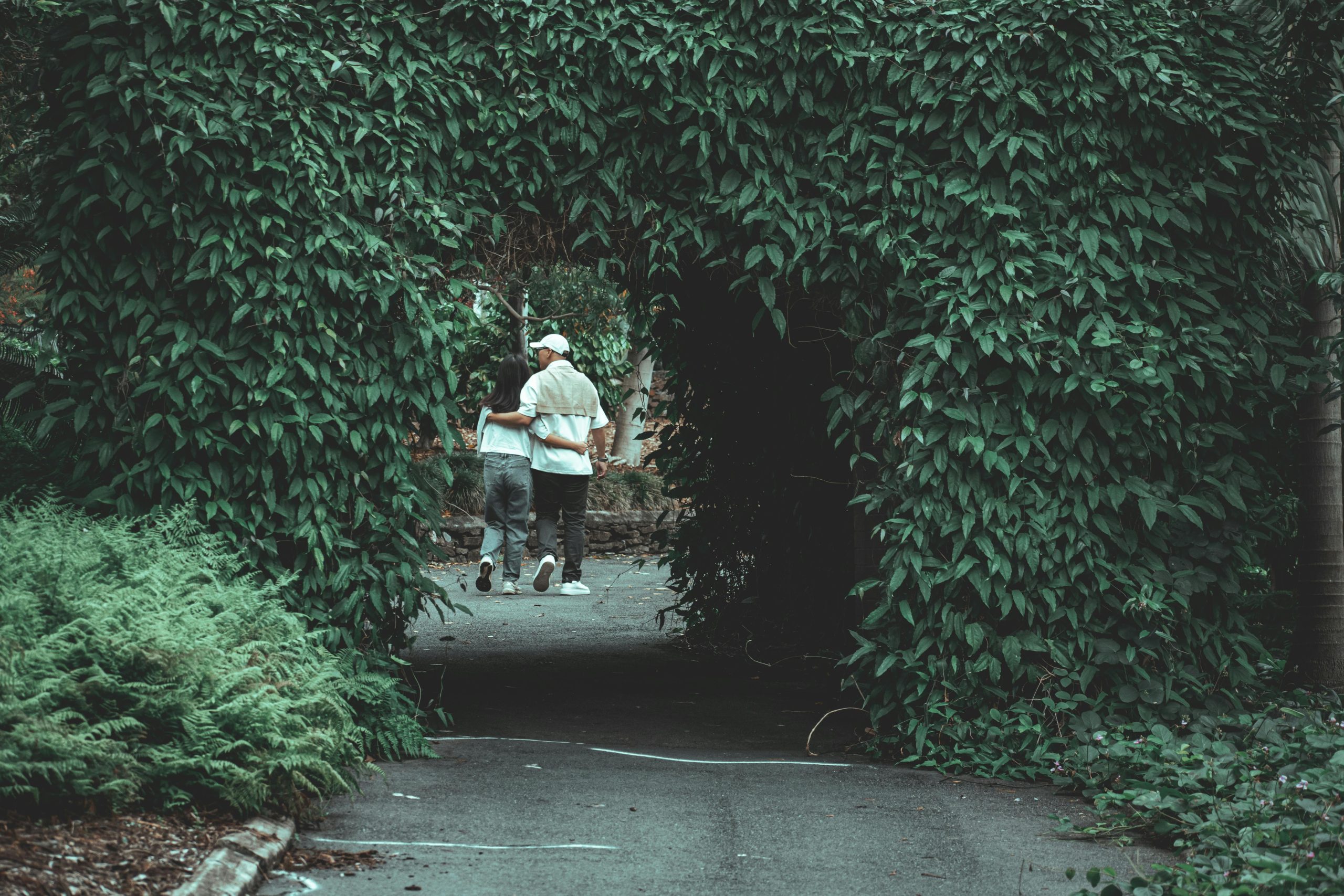
The Gap’s proximity to Mount Coot-tha Reserve and D’Aguilar National Park gives it a genuine outdoor lifestyle that few Brisbane suburbs can match. Walking trails, mountain biking tracks, and bush settings are accessible without leaving the metro area, a quality that tends to appeal to professionals and families who want city access without a completely urban environment.
 |
 |
The crime score of 10 out of 100 is among the lowest recorded for any Brisbane suburb, which aligns with what residents and buyers typically report about the area’s feel and safety.
What Type of Properties Are in The Gap?
The dwelling mix in The Gap is heavily weighted toward separate houses. According to 2021 Census data, 92% of dwellings are separate houses, with townhouses and apartments making up the remainder.
Blocks tend to be generous by Brisbane standards, and the architectural mix ranges from original brick and timber homes from the 1970s and 1980s through to more recent renovations and new builds on infill sites. The suburb has not seen the volume of unit development that inner-ring suburbs have, which preserves its character and keeps density low.
For buyers looking at houses for sale in The Gap, the current median sits at $1,408,750. Recently sold properties show a range from $1,065,000 for a three-bedroom townhouse through to $1,410,000 for four-bedroom family homes, giving you a reasonable picture of what your budget translates to.
Is The Gap a Good Suburb to Invest In?
What Do the Growth Numbers Say?
The Gap’s property performance over the past five years is hard to ignore. House prices have risen 82.13% over five years, with median values moving from roughly $773,500 to $1,408,750. Units have performed solidly too, up 48.75% over the same period.
The 10-year annual compound growth rate (CAGR) sits at 7.87% for houses and 7.18% for units, consistent long-run performance that reflects genuine demand rather than a short-cycle spike.
Here’s what the data shows across the key indicators:
Days on market has tightened sharply. Houses are moving in 16 days on average, down from roughly 36 days five years ago, a 55.56% improvement. Units are selling even faster at 13 days. When stock moves this quickly, prepared buyers have a real advantage over those still deciding.
Buyer demand is rated “High Online Demand” by PropTrack, with 2,583 average potential buyers searching the suburb each month. That figure has grown 70.61% over five years, demand is building, not plateauing.
Rental yields sit at 2.95% for houses and 3.86% for units. Over the past 12 months, yields have edged down slightly (house yields -1.34%, unit yields -0.77%), which is what you’d expect when prices rise faster than rents. Median weekly rents are $800 for houses and $750 for units, both up around 50% to 60% over five years, which is strong rental growth in its own right.
Vacancy is at 2.15%, with 21 vacant rentals recorded at the time of the report. Over three years, vacancies have fallen by nearly 49%, pointing to a tightening rental pool for investors.
Stock on market is just 0.42% of all dwellings, comfortably below the 2% level where supply pressure starts to ease. With 83% of households owner-occupied, this suburb doesn’t churn.
Days on Market Summary:
| Period | Houses | Units |
| Current | 16 days | 13 days |
| 3-Month Change | +6.67% (+1 day) | +8.33% (+1 day) |
| 12-Month Change | +23.08% (+3 days) | +30.00% (+3 days) |
| 3-Year Change | 0.00% (no change) | -35.00% (-7 days) |
| 5-Year Change | -55.56% (-20 days) | No data |
Rental Yield Summary:
| Period | Houses | Units |
| Current Yield | 2.95% | 3.86% |
| 3-Month Change | +1.37% (+0.04%) | -1.28% (-0.05%) |
| 12-Month Change | -1.34% (-0.04%) | -0.77% (-0.03%) |
| 3-Year Change | -8.39% (-0.27%) | -11.06% (-0.48%) |
| 5-Year Change | -17.13% (-0.61%) | +7.22% (+0.26%) |
At a median house price of $1.4M+, The Gap is not where you come for cashflow. The yield numbers reflect that honestly. Buyers who have done well here over the past decade came in for long-run capital growth, and the 82% five-year price increase for houses shows what that patience has produced.
What Does the Buyer Demand Data Tell Us?
Twenty-six properties listed. Over 2,500 active buyers searching. That mismatch tells you something real about how The Gap operates. When a property hits the market here, it doesn’t sit. The 16-day average selling time reflects buyers who are ready to move, not browse. If you’re serious about buying in this suburb, working with someone who can access off-market opportunities or move quickly on-market isn’t optional, it’s practical.
Demographics
The Gap has a population of 17,318 spread across 6,230 dwellings, with an average of 2.9 people per household. The median weekly household income of $2,869 puts it well above the Brisbane average, and that figure makes sense when you look at who lives here. Nearly 4 in 10 residents work as professionals, with managers making up another 17%. The largest employment sectors are health, primary education, and computer system design.
This is a suburb built around working families with above-average incomes and long-term intentions. That profile shapes everything from street presentation to the quality of the tenant pool for investors.
Key Demographics Over Time
| Indicator | 2006 | 2011 | 2021 |
| Population | 16,120 | 15,949 | 17,318 |
| Median Weekly Household Income | $1,551 | $1,937 | $2,573 |
| Median Monthly Mortgage Repayments | $1,500 | $2,100 | $2,253 |
| Owner Occupiers | 81% | 83% | 83% |
| Renters | 19% | 17% | 17% |
| Total Dwellings | 5,847 | 5,848 | 6,230 |
| Average People per Household | 2.9 | 2.9 | 2.9 |
What stands out in this data is the consistency. The owner-occupier share has barely moved in 20 years, sitting at 81 to 83% across every Census period. Household income has grown from $1,551 per week in 2006 to $2,573 in 2021, well ahead of inflation. And the total dwelling count has crept up by fewer than 400 homes over 15 years. Low supply, stable ownership, rising incomes. That combination doesn’t happen by accident.
The suburb’s SEIFA scores have held comfortably above average across all measured Census periods, which reinforces the picture of a high-income, well-established community with no signs of demographic decline.
The Gap Property Buyer Checklist
Before making an offer on any property in The Gap, work through this checklist:
- Flood and overlay check: Verify the specific address via the Brisbane City Council flood awareness map, especially around lower-lying streets and creek-adjacent areas.
- Bushfire and vegetation risk: Check proximity to D’Aguilar National Park, Enoggera Reservoir, and bushland edges, as this may affect insurance, maintenance, and long-term risk.
- Slope and drainage assessment: Review driveway gradient, retaining walls, stormwater flow, and usable yard space, especially on elevated or hillside blocks.
- Transport access: Test the commute via Waterworks Road and the Western Freeway, and confirm bus route frequency at translink.com.au.
- School catchment verification: Confirm the property’s catchment via the Queensland Government school search tool, especially for The Gap State High School.
- Property type alignment: Confirm whether a house, townhouse, or unit best suits your goal, as houses dominate the suburb and units are limited.
- Capital growth vs rental yield: Review whether the numbers suit your strategy, as houses have strong long-term growth but lower rental yield.
- Building and pest inspection: Commission one for any older brick, timber, renovated, or post-war style home, particularly those built in the 1970s or 1980s.
- Renovation approval check: Review council approvals for extensions, decks, retaining walls, pools, and major renovations.
- Buyer readiness: With houses selling in about 16 days and units in about 13 days, organise finance, inspections, and negotiation support before entering the market.
How Streamline Property Buyers Helps You Navigate The Gap Property Market
Knowing The Gap is a good suburb is only part of the picture. The real question is which property, on which street, at which price, and that’s where most buyers without local knowledge lose ground.
At Streamline Property Buyers, we work with buyers across The Gap Brisbane, helping them cut through the noise and buy with clarity. That means accessing both on-market and off-market opportunities and commercial property options, negotiating on your behalf, and doing the due diligence that protects you before you commit, not after.
If you’re thinking about buying in The Gap as a home buyer or an investor and want a clear, honest view of what’s worth pursuing, our team would be glad to talk it through with you.
The Gap QLD 4061 | Data as at April 2026
Data sourced from SuburbsFinder / PropTrack Suburb Intelligence Report for The Gap QLD 4061, prepared April 2026. All figures are indicative and based on third-party sources. Past performance is not indicative of future results. Always conduct independent due diligence before purchasing.
Connect with us today
To book a FREE discovery call ~ Click Here
Follow us on LinkedIn | YouTube | Instagram | TikTok
Tune into our podcast ~ Brisbane Property Podcast
