
Yes, foreigners can buy property in Australia. Not freely, and not without conditions, but it is possible. The rules restrict which property types are available, and the approval process is not optional. For most foreign buyers, that means new dwellings, near-new dwellings, off-the-plan purchases, and vacant land. Established homes are off the table under a ban now extended to 30 June 2029. Worth noting: plenty of articles and even some government pages still quote the earlier end date of 31 March 2027. That date no longer applies. This guide reflects what the ATO currently states.
Can Foreigners Buy Property in Australia Right Now?
The short answer is yes, with conditions. Australia’s policy on foreign investment pushes buyers toward new housing rather than letting them compete with locals for existing stock. That shapes everything about which properties are available to you.
Short Answer for Foreign Buyers and Temporary Residents
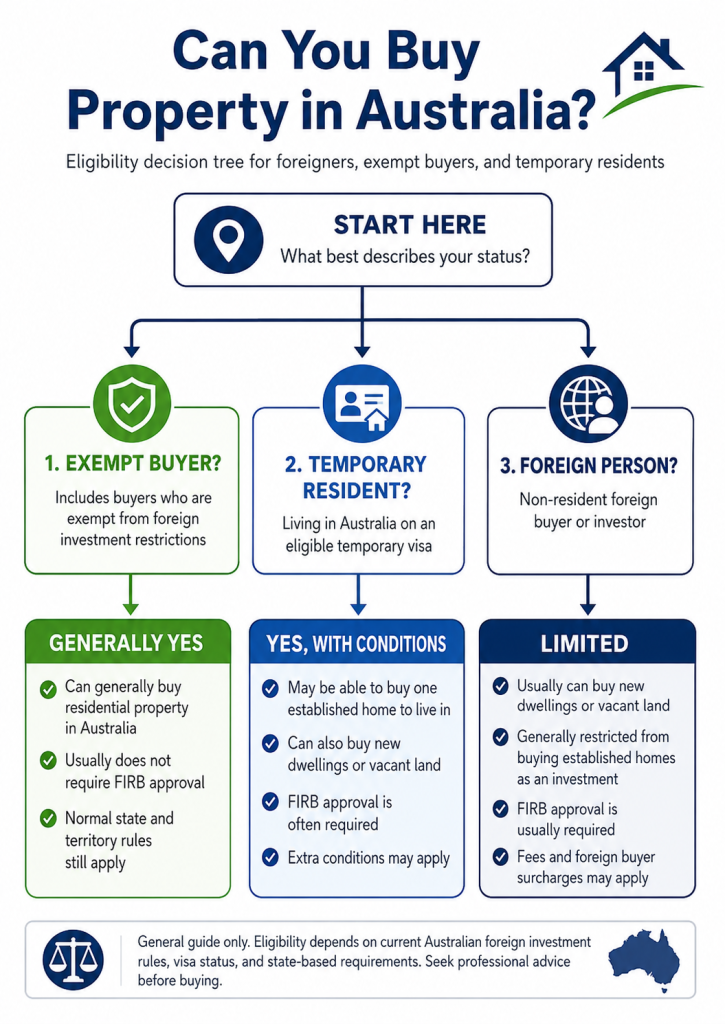
- Foreign non-residents: Can buy new dwellings, near-new dwellings, off-the-plan property, and vacant land, subject to approval.
- Temporary residents: Treated as foreign persons under current rules. The older guidance that allowed temporary residents to buy one established dwelling as a principal place of residence no longer applies cleanly. The established dwelling ban covers foreign persons, including temporary residents, unless a limited exception applies.
- New Zealand citizens and permanent residents: Generally exempt from foreign investment approval requirements for residential property.
Who Is Considered a Foreign Person in Australia?
Understanding your buyer category determines which rules apply to you.
Foreign Non-Residents
A foreign non-resident is someone who does not ordinarily live in Australia. This group faces the most restrictions and must obtain approval before buying residential land in most cases.
Temporary Residents
Temporary residents hold a valid temporary visa allowing them to stay in Australia. They are classified as foreign persons for residential property purposes under the current framework. This is a significant update from pre-April 2025 guidance, which many sites still reflect incorrectly. See the dedicated section on temporary residents below.
Who May Be Exempt from Approval
- Australian citizens (regardless of where they live)
- Australian permanent residents
- New Zealand citizens (under specific conditions linked to special category visas)
- Certain foreign government investors operating under separate frameworks
What Property Can Foreigners Buy in Australia?
Australia’s foreign investment rules don’t treat all property the same way. New dwellings, near-new dwellings, off-the-plan apartments, and vacant land are all generally available to foreign buyers with the right approval in place. Established dwellings are a different story.
New and Near-New Dwellings
Foreign buyers can buy new dwellings, meaning properties that have never been sold as a residential dwelling and have not been occupied as one. Near-new dwellings are those sold within 12 months of construction and not occupied for more than 12 months in total. Approval is required in both cases.
Off-the-Plan Property
Buying off the plan is a common path for foreign buyers. These purchases relate to dwellings not yet built or still under construction. Standard approval conditions apply, and buyers should factor in the risks unique to new and off-the-plan stock.
Vacant Land and the 4-Year Build Rule
Foreign persons can generally buy vacant residential land, but approval typically comes with a condition to build within four years. Development must be completed within that timeframe or the approval may lapse.
Established Dwellings and the Current Ban
This is where a lot of outdated content misleads readers. As of the current ATO position, the ban on foreign persons buying established dwellings applies until 30 June 2029.
Some guidance documents and commercial articles still show the earlier date of 31 March 2027. That date has been superseded. If you come across it on another site, treat that content as potentially out of date.
Limited Exceptions That Still Exist
Limited exceptions to the established dwelling ban do exist, including for large-scale redevelopment projects, build-to-rent housing at commercial scale, and certain heritage-listed or approved commercial housing developments. These are narrow in scope and not the standard path for most foreign residential buyers.
How Does FIRB Approval Work for Foreign Buyers?
FIRB stands for the Foreign Investment Review Board, but residential applications are now processed through ATO Online Services rather than directly through FIRB in most cases.
Apply Before You Sign or Make the Contract Conditional
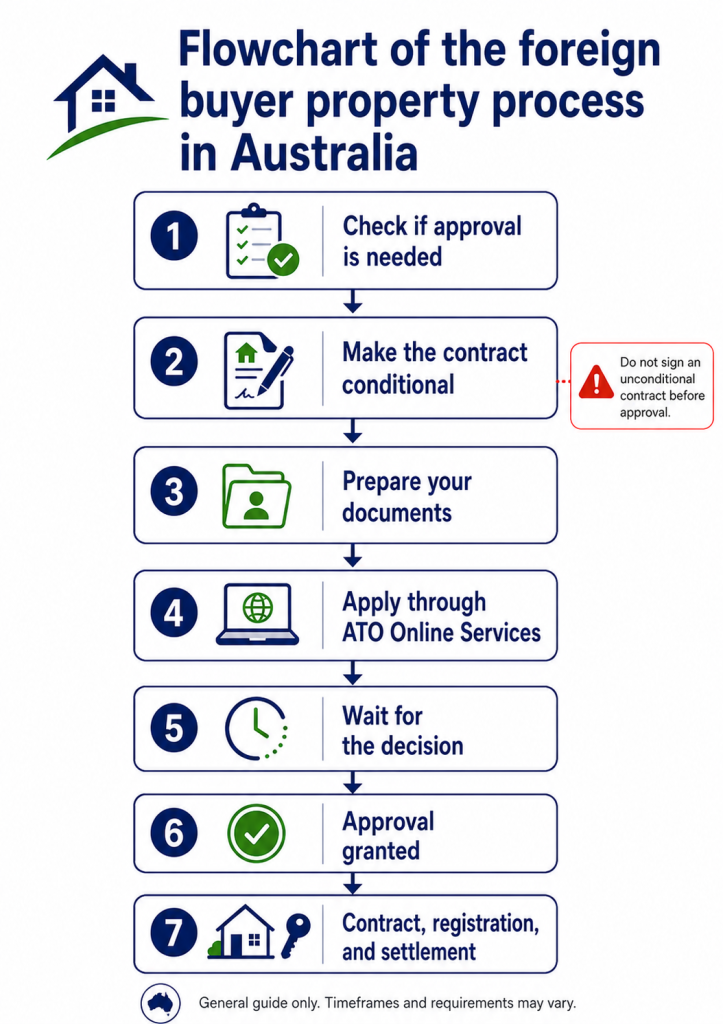
Foreign buyers must obtain approval before signing a binding purchase contract. If you sign first and approval is later refused, you may face penalties. A common approach is to include a foreign investment approval condition in the contract, giving you a period to obtain approval before being unconditionally committed.
How Long Approval Usually Takes
Residential applications typically take up to 30 days after the correct fee is paid. More complex matters or requests for additional information can extend this.
Documents and Information You Usually Need
- Personal identification
- Details of the proposed purchase (property address, price, type)
- Visa or residency status documentation
- Information about the intended use of the property
What Does It Cost for Foreign Buyers to Purchase Property in Australia?
The purchase price is only part of what foreign buyers pay. On top of standard buying costs, foreign buyers face FIRB application fees, state-level duty surcharges, ongoing compliance obligations, and in some cases annual vacancy fees. These costs vary by state and property value, and they add up quickly. Here’s what to budget for before you sign.
FIRB Application Fees
Fees are set by the government and vary by property type and value. For 2025-26, residential land other than established dwellings starts from approximately AUD 4,500 for properties valued under AUD 75,000, rising to AUD 15,100 for properties up to AUD 1 million. Fees increase for higher-value properties.
| Property Value | Indicative Fee (residential, non-established) |
| Under AUD 75,000 | AUD 4,500 |
| Up to AUD 1 million | AUD 15,100 |
| Over AUD 1 million | Higher tiered fees apply |
Always check the ATO fee schedule directly, as fees are reviewed annually.
State Stamp Duty Surcharges
Each state charges its own additional duty on top of standard transfer duty for foreign buyers. These are meaningful numbers.
| State | Surcharge Name | Rate (approx.) |
| Queensland | Additional Foreign Acquirer Duty (AFAD) | 8% |
| New South Wales | Surcharge Purchaser Duty | Set by Revenue NSW |
| Victoria | Foreign Purchaser Additional Duty | 8% |
For a AUD 700,000 purchase in Queensland, AFAD alone adds AUD 56,000 on top of standard transfer duty. Budget planning must account for this.
Ongoing Costs and Compliance
Two post-settlement obligations catch many foreign buyers off guard.
Registration: Foreign persons who acquire residential land must register their interest on the Register of Foreign Ownership of Australian Assets within 30 days of settlement.
Vacancy Fee: If the property is not residentially occupied or genuinely available for rent for more than 183 days in a calendar year, an annual vacancy fee can apply. Foreign owners must lodge a vacancy fee return each year.
Legal, Inspection and Finance Costs
Standard buyer costs still apply: conveyancer or solicitor fees, building and pest inspections, finance costs, and for overseas buyers, currency exchange friction. Budget at minimum AUD 3,000 to AUD 6,000 for conveyancing and inspections in Queensland, depending on property complexity.
Can Temporary Residents Buy Property in Australia?
What Changed from 1 April 2025
Before April 2025, temporary residents could often buy one established dwelling to use as their principal place of residence. That framework has changed. The current established dwelling ban applies to foreign persons, which includes temporary residents, unless a specific exception applies.
The practical result: most temporary residents are now limited to the same property types as foreign non-residents: new dwellings, near-new dwellings, off-the-plan property, and vacant land with development conditions.
Common Myths Temporary Residents Should Ignore
- “I can buy an established home to live in as a temporary resident.” Not under current rules unless a limited exception applies.
- “The ban only runs until March 2027.” The ATO now states the ban runs until 30 June 2029.
- “I don’t need FIRB approval because I live here.” Temporary residents are still classified as foreign persons for residential property purposes and generally need approval.
Step-by-Step Checklist for Buying Property in Australia as a Foreigner
- Work out your buyer category first. Are you a foreign non-resident, a temporary visa holder, or someone who may be exempt, like a permanent resident or eligible New Zealand citizen? The answer changes everything that follows.
- Set your budget including all surcharges. Factor in FIRB fees, state duty surcharges, standard transfer duty, legal fees, and inspections before making any offers.
- Get pre-approval for finance. Some lenders have restricted lending to foreign buyers. International banks with an Australian presence can be a practical starting point. Allow extra time.
- Engage a local solicitor or conveyancer early. Queensland contract law has specific conditions and timeframes that require local expertise.
- Apply for foreign investment approval. Apply through ATO Online Services before signing unconditionally. Make any contract conditional on approval.
- Conduct thorough due diligence. Building inspection, pest report, strata records if applicable, and legal title checks.
- Complete settlement. Your conveyancer manages the settlement process.
- Register your interest. Register on the Register of Foreign Ownership of Australian Assets within 30 days of settlement.
- Lodge vacancy fee returns annually. Even if no fee applies, you may still need to lodge a return.
How a Streamline Property Buyers Agent Can Help Foreign and Interstate Buyers in Brisbane
Navigating property rules is one part of the process. Finding the right property in the right Brisbane suburb, at the right price, is another. That is where local representation matters.
I work with foreign buyers and interstate investors who want to buy well in Brisbane and South East Queensland without having to manage the process from thousands of kilometres away. What I see often is buyers who understand the legal framework but underestimate the local knowledge needed to assess value, identify genuine growth areas, and avoid overpaying in a market they cannot physically attend.
Working with a buyers agent in Brisbane means you have someone conducting inspections, negotiating on your behalf, and connecting you with trusted local conveyancers, lenders familiar with foreign buyer lending, and due diligence specialists.
If you are a foreign buyer or interstate investor considering Brisbane property, get in touch with Streamline Property Buyers to talk through your situation before you start searching.
Connect with us today
To book a FREE discovery call ~ Click Here
Follow us on LinkedIn | YouTube | Instagram | TikTok
Tune into our podcast ~ Brisbane Property Podcast
