
Choosing between a townhouse vs house in Brisbane is one of the most practical decisions you’ll face as a buyer. The gap between the two property types has widened significantly, and the right choice now depends less on personal preference and more on your budget, goals, and how long you plan to hold. Whether you’re a first-home buyer, a growing family, or a property investor, this guide walks through the real differences so you can make a more confident decision.
Quick Decision Summary
Choose a townhouse if you:
- Need a lower entry price to stay in a preferred Brisbane location.
- Want lower ongoing maintenance without sacrificing a sense of home.
- Are prioritising rental yield and total return over maximum land exposure.
- Are a smaller household, first-home buyer, or downsizer.
Choose a house if you:
- Want full control over your land and future improvements.
- Have school access, yard space, or renovation plans as a priority.
- Are focused on long-term, land-led capital growth.
- Can stretch the budget without overextending.
What Is the Difference Between a Townhouse and a House?
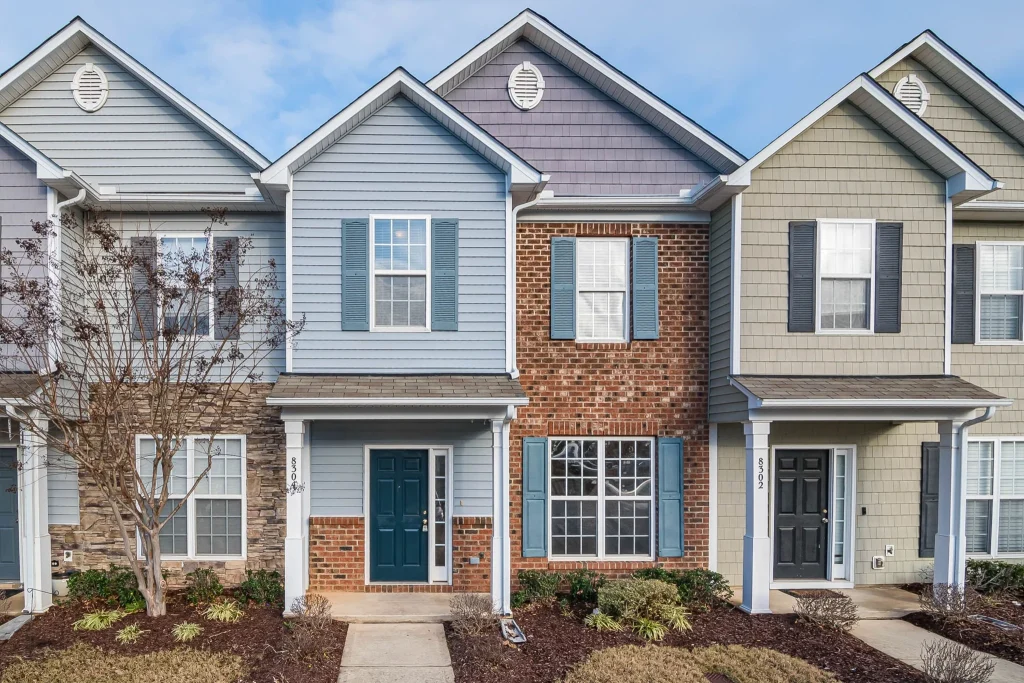
The Australian Bureau of Statistics defines a separate house as a dwelling that is structurally independent from surrounding dwellings. A townhouse falls under the “semi-detached, row or terrace house, townhouse” category and is defined as having its own private grounds, no dwelling above or below, and being structurally attached to one or more neighbouring dwellings.
In plain terms, a townhouse gives you more of the feel of a house than an apartment, but with less land and greater density.
The ownership structure is where things get more nuanced, particularly in Queensland. The Queensland Government notes that body corporate properties are made up of individually owned lots plus common property, and many townhouses fall under this category. When you buy into a body corporate property, you automatically become a member, pay regular levies, and must follow the scheme’s by-laws. The body corporate certificate becomes a critical due-diligence document because it covers insurance, levies, maintenance rules, and how the complex is managed.
That distinction, land title versus strata title, is one of the most important practical differences between the two property types in Brisbane.
Why This Choice Matters More in Brisbane Right Now
Brisbane’s population has continued to grow strongly, with net overseas migration and interstate movement both contributing to sustained demand for housing across the city. At the same time, dwelling approvals in Queensland have not been growing fast enough to absorb that demand at pace.
The result is a clear affordability gap between detached and attached stock. Brisbane’s median house price has pulled well ahead of the median unit price in recent years, with a difference now sitting at roughly $400,000 or more depending on the source and time period. That gap has made townhouses vs houses a genuine financial decision for many buyers, not just a lifestyle preference.
It’s also worth noting a common data issue: townhouse performance figures are not always published as a separate citywide series. The ABS classifies them under “semi-detached” dwellings, while many property index providers group strata-title properties including townhouses, villas, and similar dwellings under “units.” When you’re reading Brisbane market data, house versus unit comparisons are the closest available proxy for the townhouse vs house question.
Buying in Brisbane?
Know what to check before you make an offer.
Download our FREE Brisbane Property Buyers Pre-Offer Checklist.
Townhouse vs House for Families
The Case for a House
For family buyers, the strongest argument for a detached house is space, privacy, and control. A house gives you:
- No body corporate, no levies, no collective decision-making
- Freedom to extend, renovate, or add a structure without committee approval
- More outdoor space for children, pets, or entertaining
- A land title with full ownership of the ground beneath you
Families who prioritise larger backyards, room to grow, or significant renovation plans tend to be better served by a house.
The Case for a Townhouse
The most compelling family argument for a townhouse is location. When the price gap between houses and attached stock is $400,000 or more, a townhouse can be what keeps a buyer inside their preferred Brisbane suburb rather than trading commute time for land.
Townhouses are typically closer to the city, schools, and amenity-rich areas than comparable houses in the same budget range. For smaller families, first-home buyers, and households where commute time or school catchment matters most, the trade-off is often worth it.
The Trade-Offs Worth Knowing
Townhouse drawbacks are real and should factor into your decision:
- Shared walls mean less acoustic privacy
- Body corporate by-laws commonly regulate noise, pets, and parking/
- Multi-level layouts can be less practical for young children or older residents
- Common-property obligations can add costs and complexity over time
- Capital growth on townhouses has historically trailed that of detached houses over the long term.
Should I Buy a House or a Townhouse in Brisbane for Investment?
The best answer here is goal-dependent.
If capital growth is your priority
A detached house is typically the stronger long-term hold. Cotality’s index methodology highlights a meaningful distinction: houses sit on a land title where the owner claims full ownership of the ground, while strata-title properties, which include most townhouses and units, involve shared claim to common land. That structural difference in title is one reason detached houses are generally viewed as carrying a stronger long-run capital growth profile.
If yield and cash flow matter more
Townhouses offer a more accessible entry point and, in many Brisbane markets, stronger gross yields than comparable houses. Streamline Property Buyers’ own Brisbane market data shows gross yields on units and attached dwellings running above those of houses. Recent Domain and NAB data has also shown Brisbane unit values outperforming houses in some periods, with units recording stronger annual growth than houses in both Domain’s March 2026 House Price Report and NAB’s April 2026 Cotality-based Brisbane market update.
Brisbane vacancy rates have remained very low, and leasing times on well-located attached dwellings have been short, which reinforces the rental case for the right townhouse in the right location.
A fair summary for investors: a house is generally the better choice for pure long-term capital growth, while a townhouse is often the better choice for buyers who need a lower entry price, want lower maintenance, or care more about rental yield and total return than maximum land exposure.
Which Property Type Offers Better Long-Term Returns in Brisbane?
Brisbane’s broader investment case is supported by sustained population growth, a chronic undersupply relative to demand, and a significant infrastructure pipeline tied to the 2032 Olympic and Paralympic Games. Neither property type is immune to market cycles, and neither one always wins.
What tends to drive long-term returns in Brisbane:
- Location over property type in most cases
- Land component for houses in established inner-ring and middle-ring suburbs
- Yield and entry price for attached stock in supply-constrained, well-connected areas
- Quality of the body corporate for townhouses, which can significantly affect ongoing costs and resale appeal
In my experience, buyers who focus too heavily on the property type and not enough on the specific location and asset quality often end up with the wrong outcome regardless of which category they choose.
When a Townhouse Is the Smarter Buy
- Your budget doesn’t stretch to a house in your preferred suburb
- You’re a first-home buyer wanting to enter the market without moving far from the city
- You’re an investor focused on yield and affordability rather than maximum land
- You’re downsizing and want lower maintenance without going to an apartment
- The body corporate is well-managed with reasonable levies and reserves
When a House Is Worth Stretching For
- Long-term capital growth through land appreciation is your main objective
- You want complete control over your property without by-laws or levies
- Renovation or development potential is part of your strategy
- You have a growing family with space and flexibility as genuine priorities
- You’re buying in an established inner or middle-ring Brisbane suburb where land scarcity supports long-run value
Brisbane Due-Diligence Checklist Before You Buy
For a House
- Understand zoning and development overlays
- Check flood and environmental risk through Brisbane City Council mapping
- Confirm land dimensions and any easements
- Review building and pest inspection carefully for older stock
- Assess council rates and water access charges
For a Townhouse
- Request the full body corporate certificate, including financials and minutes
- Check levies (administration fund and sinking fund) and whether the sinking fund is adequately funded
- Review by-laws for any restrictions on pets, parking, or modifications
- Check the age and condition of shared infrastructure such as roofing, driveways, and pools
- Confirm body corporate insurance covers the building and what is excluded
- Review any pending special levies or upcoming capital works
How a Streamline Property Buyers Agent Can Help You Choose the Right Property
Choosing between a townhouse and a house in Brisbane isn’t a question with one right answer. It comes down to your budget, your goals, your timeline, and the specific property in the specific location.
What I’ve seen consistently is that buyers who approach this decision with clear criteria, rather than a fixed preference, tend to make better purchases. The strongest outcomes come from understanding what the property needs to do for you, and then finding the asset that does it at the right price.
If you’re weighing up your options in Brisbane and want a clear strategy tailored to your situation, speak with a buyers agent who knows the Brisbane market inside out. That’s exactly what we do at Streamline Property Buyers.
Connect with us today
To book a FREE discovery call ~ Click Here
Follow us on LinkedIn | YouTube | Instagram | TikTok
Tune into our podcast ~ Brisbane Property Podcast
